


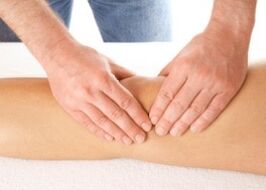
Many people experience knee pain from time to time when they bend it.Sometimes there is knee pain when walking.This is completely logical, because the knee joints almost always carry a significant load.They therefore constitute one of the most vulnerable joints in the human body.But you still need to know when and why knee pain occurs and how to get rid of it.
Knee pain is a common symptom.This can occur during illness or under the influence of other traumatic factors that affect the knee both externally and internally.
There are many causes of knee pain: from simple fatigue to too intense sports, through injuries of various types, to diseases that affect one of the many structures of the knee joint.
How does knee pain manifest?
Knee pain can manifest itself in different ways.First of all, their intensity depends on the type of damage, as well as its severity.Sometimes a person complains that after intense sports training, painful knee pain begins to appear at night or minor pain develops during physical exertion.However, a little later, a person may begin to be bothered by intense and constant pain, both in the knee and in the back.Therefore, it is important to determine the causes of pain at the initial stage.Sometimes to relieve pain it is enough to perform a few procedures.But in case of rupture of ligaments or tendons, as a rule, surgical treatment cannot be avoided.In any case, if a person suffers from very severe knee pain, you should not expect the symptom to go away on its own.But before deciding what to do and how to treat pain, you need to make a correct diagnosis and inform the doctor about all the features of the pain.First of all, you should indicate whether the knee hurts when you bend over, whether pain or discomfort bothers you at night, whether pain occurs below the knees, etc.
When does knee pain appear?
The causes of knee pain can be varied.Severe knee pain often develops after ligament damage from a serious injury.However, severe pain in the knee joint can manifest itself in different ways, because the structure of the joint is very complex.There are a total of four ligaments in the knee that connect the femur to the fibula and tibia bones.When one of these ligaments ruptures, intense pain appears in the injured area.This happens most often in athletes.In this case, the pain bothers the person for a long time when walking, and during running the discomfort persists even longer.
Two other ligaments are cut inside the knee.These two cruciate ligaments, anterior and posterior, meet at the front of the lower leg.When the anterior ligament ruptures, a cracking sound occurs in the knee.Then a sharp, severe pain appears, after which a tumor develops in the knee area.After suffering such an injury, you should stop immediately, because the damaged areas hurt so much that the knee loses its stability.
If the posterior cruciate ligament in a leg joint is torn, the pain is usually less severe.With such an injury, pain appears in the knee at the back and a feeling of instability.
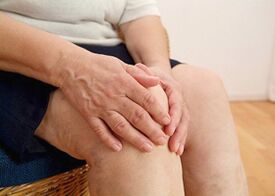
Knee pain also develops when the tendon is damaged.This disease is called tendinitis.In this case, an inflammatory process and irritation of the tendons develop.The reasons for this phenomenon are injuries, mainly sports injuries.Most often, such an injury, both to the left and to the right knee, occurs in skiers, runners and those who are engaged in cycling.This inflammation sometimes develops simultaneously in both knees.The patient suffers from discomfort and pain in the kneecap or the front of the knee.Most often, discomfort and pain are felt when bending.In this case, there is no need to use traditional treatment or try to use ointment to relieve pain.Treatment of pain in the knee joint should be prescribed only after its cause has been accurately determined.Only then can we draw a conclusion about what to do and how to treat the disease.Otherwise, the disease persists for a long time.
Another cause of knee pain is damage to the meniscus, which is the cartilage that bends at the knee joint.Such damage can occur in different parts of the meniscus, but in any case the person develops a tumor.
Sometimes when the knee is injured, the fluid sacs that allow the ligaments and tendons to glide smoothly become inflamed.In this case we are talking about bursitis, which can cause both pain below the knee, in front and behind.With bursitis, swelling and redness appear in the area where inflammation develops.A person feels pain when squatting, kneeling and also when straightening the affected knee.Bursitis can develop under the kneecap (called precap bursitis) and when infected it causes very serious swelling, general malaise and fever.If the infection affects the area below the left or right knee, at the back, the pain inside the knee becomes intense when a person goes up or down stairs.
In cases of trauma, wounds, or degeneration of the cartilage or bone, parts of the cartilage may break away and become detached inside the cup.A person does not think about how to treat this condition until the loose body begins to interfere with the movement of the joint.In this case, pain appears.
When the kneecap is moved, a person notices the abnormal position of the kneecap: it becomes perpendicular to the correct position.Symptoms of this phenomenon are pain, swelling of the affected area, significant discomfort when stretching the legs and when walking.A movement of the patella that occurs once often occurs again in the future.Therefore, doctors advise doing special exercises aimed at supporting the muscles.
When the knee joint expands following an injury, the knee is stretched and may bend in the opposite direction.Such damage is characterized by the appearance of a tumor and the person is also bothered by pain inside the knee.This injury is also dangerous because it leads to partial or complete rupture of the ligaments.
Chronic illnesses are a separate group of illnesses that lead to knee pain.In rheumatoid arthritis, which affects all ligaments, including the knee, a person suffers not only from pain in the back and front of the knee, but also from general stiffness of movements.Deformation of the knee joints occurs gradually, the patient suffers from constant discomfort.With arthritis, both knees are affected at the same time;exacerbations and periods of calm occur periodically.Septic arthritis is a consequence of an infection.Its symptoms are pain, redness, swelling.A person may feel that the pain is localized in a vein.This condition often causes fever.
In osteoporosis, commonly called degenerative arthritis, pain below the knee, behind and in front, develops due to wear and tear of the cartilage.The disease develops gradually;As a rule, knee pain first worries when the weather changes, in the morning.Later, the situation gets worse.This disease develops less frequently in men, osteoporosis is often the cause of knee pain in women.
At the same time, the development of gout can be the cause of acute pain in the knees.This disease manifests suddenly with redness, swelling and intense pain.The knee joints remain in this state for about 10 days, and the discomfort disappears only after a few weeks.
However, knee pain is sometimes the result of ordinary overwork.People who are not used to sports training may notice that their legs below the knees and the knees themselves hurt after running long distances, as well as when walking if the person is already very tired.To avoid this, you should avoid overloads and gradually increase the pace of your training.
In addition to the described diseases and conditions, pain in the anterior part of the knee joint can accompany chondromalacia of the patella.Osgood-Schlatter disease is most often diagnosed in young people who actively participate in sports.In this case, the pain can be of varying intensity.Often a person is bothered by pain in the legs, below the knee.
How to get rid of knee pain?
There are a number of general recommendations, the implementation of which helps reduce the risk of developing diseases and conditions that cause knee pain.One of the causes of these diseases is excess weight.Indeed, in this case, the tension on the knee joints increases with any physical effort.People who tend to be overweight are more likely to develop osteoporosis, leading to cartilage problems.
Sometimes a person has pain on the side of the knee when bending or in another area after overstretching the muscles under excessive load.This could be physical work, cycling or too intense exercise.In this case, it is important not only to give the body adequate loads, but also to provide enough rest so that the muscles can recover.
Answering the question of why the knees are damaged, experts note insufficient muscle flexibility.If the muscles are too weak or tense, then during physical exertion and even when walking, the tension on the knee joint is not relieved.As a result, it may initially be painful for a person to bend and straighten the knee, and later the pain may even become constant.Therefore, in this case, proper training and regular performance of specially selected physical exercises are necessary to develop and strengthen muscles.
Additionally, knee pain when bending and walking develops with flat feet, in the case where one leg is shorter than the other.Such defects must be corrected with the help of special shoes, otherwise, over time, the pain can turn into chronic pain and it will not only be painful for the person to bend the leg at the knee, but also difficult to walk.
There is no need to take risks and participate in sports competitions in which there is a high probability of overload.If a person is engaged in skiing, athletics, basketball or other sports where the risk of falls, injuries and overloads is increased, he must calculate his strength extremely correctly.
The risk of injury also increases if the knee has already been injured.Therefore, if after an injury you feel pain above the knee, below the knee or directly in the joint, you should immediately consult a doctor.
At the first signs of pain in the knee joint, you should definitely let your legs rest as long as possible.You can try to relieve the pain by using topical pain relievers.But if the pain does not go away, you should definitely consult a specialist.Knee pain should be treated if signs of serious injury or illness appear.It is therefore necessary to consult a doctor if acute knee pain does not disappear for several days, if there is swelling and vascular pain, if there is deformation of the knee.It is important to treat knee pain immediately if redness and fever appear, as this is a sign of infection.
But before starting direct treatment of knee pain, a specialist must make a diagnosis.Initially, a complete physical examination and detailed interrogation of the patient are carried out, as well as special tests.Then the doctor prescribes an X-ray, CT scan or MRI.If an infection is suspected, a blood test is required.Only by having the results of all studies available can the doctor determine how to treat knee pain.
If your knee is injured, you should apply a bandage.However, regular dressing is only sufficient if the injury is not serious.If it hurts a person to stand on his knee, he cannot bend and straighten it without pain, then a more serious injury may be suspected.When ligaments are damaged or sprained, special bandages or dressings are often necessary.
To prevent the development of a tumor during an injury, you should apply ice to the injury site.You can keep ice for no more than 15 minutes, and to avoid frostbite, you must first wrap it in a cloth or towel.
Pain relievers are used as an anti-inflammatory treatment for pain in the knee joints, and sometimes antibiotic treatment is necessary.
Physiotherapy is also practiced.Some exercises can be done at home, but during intensive recovery, your doctor will prescribe a visit to a physiotherapy office or gym in a medical institution.
Sometimes the nature of the damage is such that it is impossible to get rid of knee pain without surgery.For this purpose, we can resort to arthroscopic surgery, the use of which allows the operation to be carried out through minimal incisions.If the damage is significant, it is sometimes necessary to replace parts of the knee with special prostheses.Total knee arthroplasty involves the installation of metal, polymer and plastic prostheses.Also in modern medicine, when treating knee pain, some non-surgical methods are used that allow you to achieve the desired effect relatively quickly.